Before the bell
The wai khru ram muay explained
Why Muay Thai fighters bow at each corner and dance before the first round, what the headband and armbands mean, and the music that goes with it.
Choose your seat for fight night ↗What the words mean
Four Thai words make up the name. A wai is the respectful greeting with the palms held together; khru, borrowed from the Sanskrit guru, means teacher; ram is dancing in the classical manner; muay is boxing. Together the phrase comes out in English roughly as a war dance in salute of the teacher, and in everyday Thai it is cut down to either wai khru or ram muay. The same idea of honouring one's teacher runs through Thai music, the masked khon dance-drama and the sword art krabi krabong, as well as Muay Thai.
Circling the ring
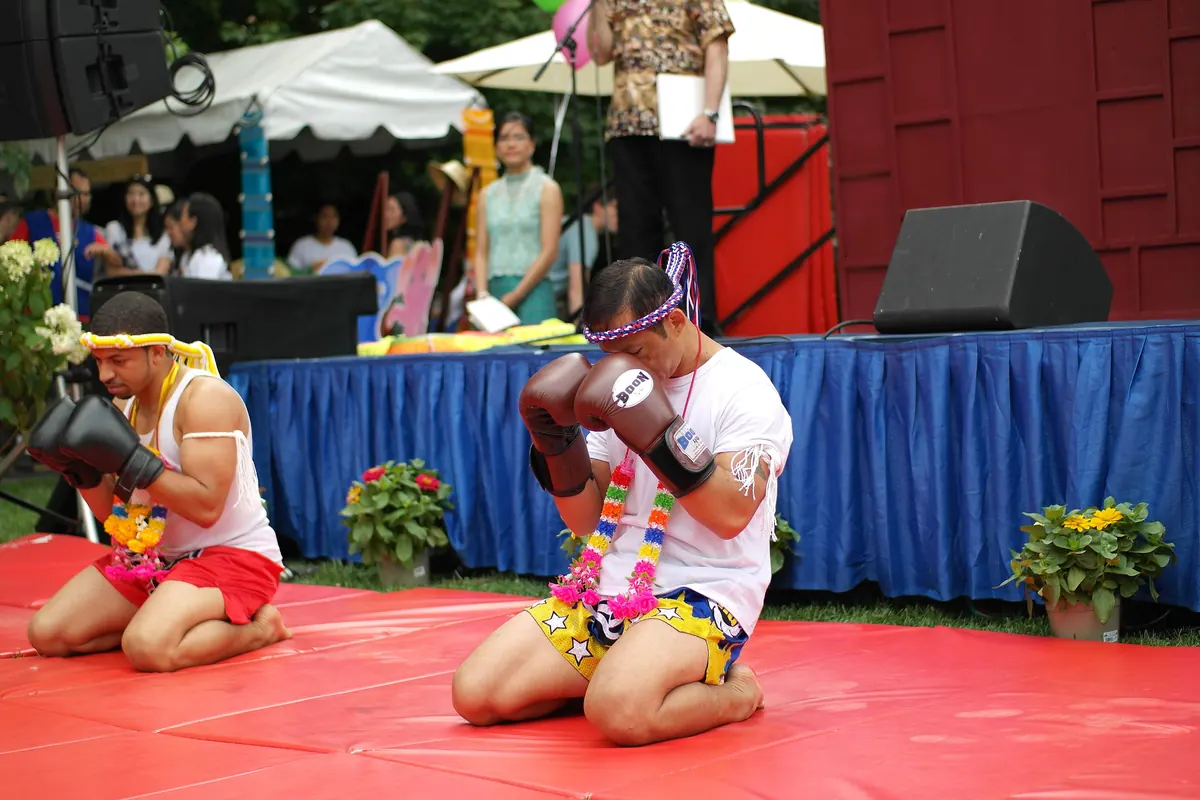
On entering the ring, a fighter walks around it anticlockwise and stops to pray at each corner, bowing the head three times there: once each for the Buddha, his teaching, the Dharma, and the community of monks, the Sangha. Only then does the dance begin. In the days when bouts were fought before royalty, the salute extended to the king as well; now its honour goes to teachers, parents and ancestors. It is a mark of respect as much as a preparation.
The dance itself
The ram muay is personal. It can be long and intricate or short and simple, and its gestures are traditionally traced to Hanuman, the monkey hero of the Ramayana. It often carries clues about who trained the fighter and where they come from. For a visitor, it is the slowest and quietest part of the night and a chance to take in the fighters before the action starts.
The headband and the armbands
Many fighters enter wearing a mongkhon, a headband, and pra jiad, armbands. The custom dates from the long centuries of war in Siam. Before a battle, a young man would tear a piece from the clothes of someone he loved, often his mother's sarong, and carry it into the fight for luck and to keep harmful spirits away. In the modern ring the headband stands for the fighter's gym. A trainer hands it over only when he judges a fighter ready to fight in the camp's name, and after the ritual he will often take it back and set it in the corner.
The music: sarama
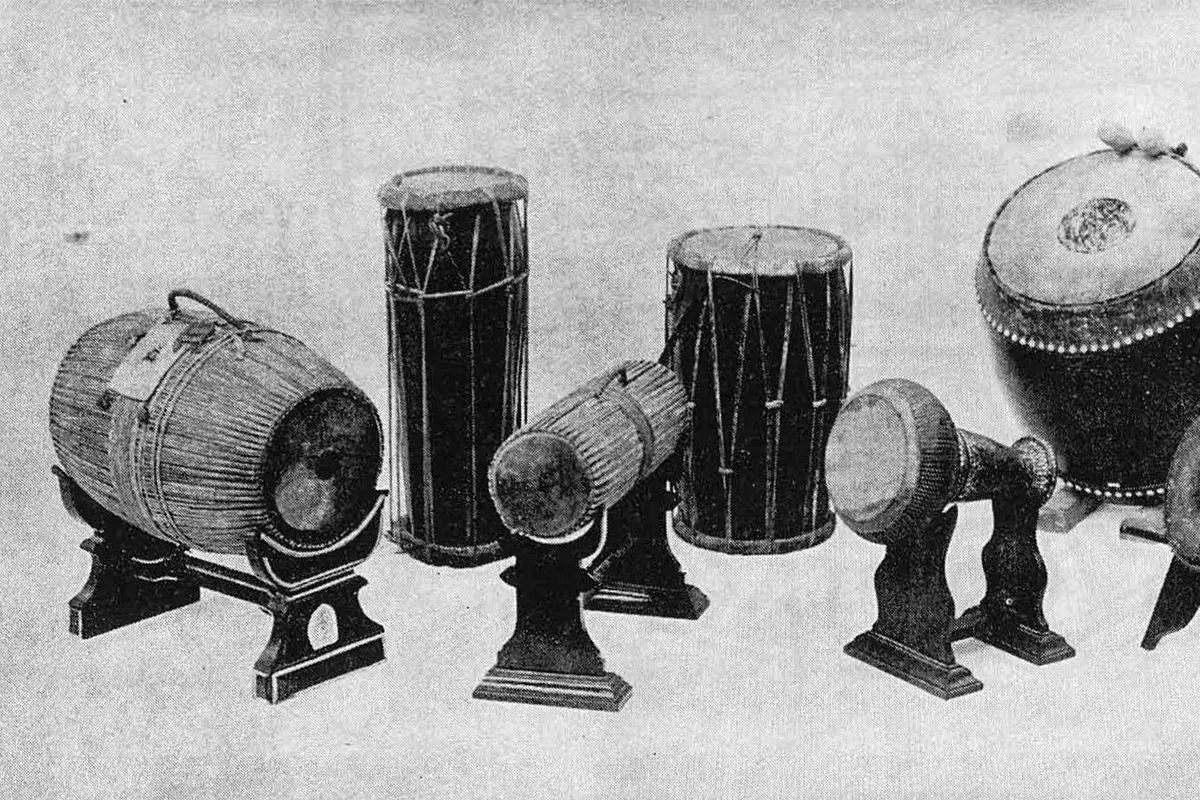
The ritual is accompanied by music called sarama. Up to four musicians play it: one on the pi, a pipe with a quadruple reed, close to an oboe; two on the klong khaek, a pair of drums; and one on the ching, cupped brass cymbals that keep the beat. The tempo is slow and stately during the ram muay. Once the fighting starts, the music quickens to match the action and the crowd, and from that point it is known as phleng muay, boxing music. Other kickboxing sports have nothing quite like it.
A ceremony with its own day
Each year on 17 March, Thailand marks Muay Thai Day with a Muay Thai festival and a wai khru ceremony, held in memory of Nai Khanom Tom, the fighter at the centre of a famous story set after the fall of Ayutthaya in 1767. Scholars debate whether the story is history or legend, but the date has become the sport's own festival, and it puts the salute to the teacher, the ritual you see before every bout, at the heart of the celebration.
Watching it as a visitor
Be in your seat before each bout starts, because the ritual is short and easy to miss if you are still at the bar. There is nothing you need to do: watch, keep conversation down, and save the cheering for the fight. Take photos if you like, but keep your phone low so the people behind you can see. If you want to understand more of what you see once the gloves touch, the home page sets out the strikes, the clinch and the scoring.
Read next: Khao Lak Muay Thai: worth it?
Sources